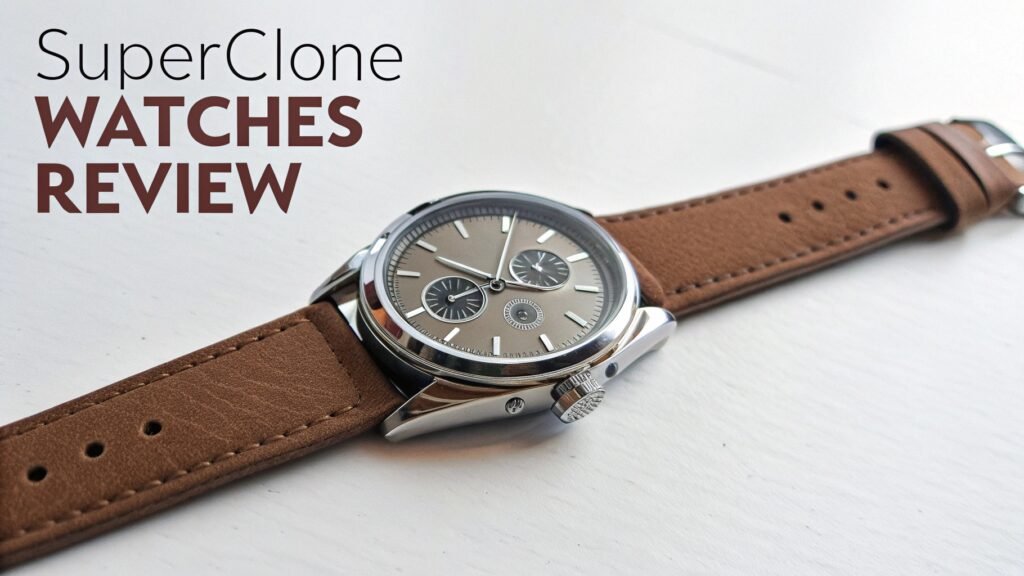
SuperClone Watches Review: Is the Value Worth It?
Have you ever found yourself admiring a luxury timepiece but hesitated when you saw the price tag? Many watch enthusiasts face this exact dilemma. This is where SuperClone watches come into the picture.
These remarkable replicas have taken the watch world by storm with their striking resemblance to genuine luxury timepieces at a fraction of the cost.
SuperClone watches offer watch lovers the chance to enjoy the luxury watch experience without spending thousands or even tens of thousands of dollars.
Key Takeaways
- SuperClone watches are high-quality replicas designed to closely imitate genuine luxury timepieces in appearance, feel, and functionality
- The best SuperClone watches use premium materials including 316L or 904L stainless steel, genuine sapphire crystal, and high-grade movements
- Price points typically range from $300 to $1000 depending on the complexity of the model and quality of materials
- Most popular SuperClone models include Rolex Submariner, Daytona, GMT Master II, Audemars Piguet Royal Oak, and Patek Philippe Nautilus
- SuperClone watches offer significant value for those who appreciate luxury watch aesthetics but cannot justify spending thousands on authentic pieces
- The quality gap between genuine watches and SuperClones has narrowed considerably in recent years
- While externally similar, SuperClones still differ from genuine watches in movement quality, craftsmanship, and long-term durability
- Purchase from reputable sellers to avoid low-quality fakes that may be advertised as SuperClones
- SuperClone watches do not hold value like authentic luxury timepieces, which often appreciate over time
- Some SuperClone watches now feature cloned movements that closely mimic the function and decoration of genuine calibers
- Ethical considerations exist around the purchase of replica watches, as they infringe on intellectual property rights
- Wearing a SuperClone requires honesty if asked about its authenticity to maintain personal integrity
What Are SuperClone Watches?
SuperClone watches represent the pinnacle of replica watchmaking technology. These are not the cheap, obvious fakes of yesteryear that you might find on street corners. SuperClones are sophisticated reproductions that aim to recreate luxury timepieces with impressive accuracy.
The term “SuperClone” refers to replica watches that stand at the top tier of quality, using premium materials and advanced manufacturing techniques to create timepieces that closely resemble their authentic counterparts.


Unlike basic replicas, SuperClone watches pay extraordinary attention to detail. They typically use high-grade materials such as 316L or 904L stainless steel, genuine sapphire crystal for the watch face, and ceramic for bezels. The weight, feel, and overall presence of a SuperClone watch aims to match that of the genuine article.
What truly sets SuperClones apart is their accuracy in replicating even the smallest details of original watches. From the precise placement of logos to the correct fonts on the dial, from the exact color matching to the smooth operation of rotating bezels, these replicas strive for perfection.
Many SuperClones have become so advanced that they can fool even experienced watch enthusiasts at a glance.
The movement inside a SuperClone watch has also evolved significantly. While earlier replicas contained basic Chinese movements, today’s SuperClones often feature clone movements designed to mimic the function and even the decoration of genuine Swiss calibers.
Some even include replica versions of complications like chronographs, GMTs, and moon phases that actually work as intended.
The market for SuperClone watches has expanded dramatically in recent years, with dedicated factories focusing on specific brands and models. These operations have invested in sophisticated equipment and skilled labor to create replicas that push the boundaries of what was previously thought possible in the replica watch industry.
The Evolution of SuperClone Technology
The journey of replica watches from obvious counterfeits to today’s sophisticated SuperClones represents an fascinating evolution in manufacturing capabilities. In the early days, replica watches were crude imitations that could be spotted from across the room. They used cheap materials, had poor construction, and contained unreliable movements that often failed within months.


The dramatic improvement in replica watch quality began in the early 2000s as manufacturing technology advanced and access to better materials increased. The first significant jump came when factories began using better stainless steel and improved their case finishing techniques. Soon after, sapphire crystal replaced mineral glass, and ceramic bezels began appearing on higher-end replicas.
By the 2010s, replica manufacturers had made remarkable strides in accuracy. Dial printing became sharper, color matching more precise, and overall proportions much closer to genuine watches. The introduction of 904L stainless steel—the same grade used by Rolex—marked another milestone in the evolution of SuperClones.
Perhaps the most significant advancement has been in movement technology. Early replicas contained simple Chinese movements that bore little resemblance to the Swiss calibers they purported to replace. Today, specialized factories produce clone movements that not only function similarly to genuine calibers but also include decorative elements like Geneva stripes, blued screws, and proper engravings.
Modern SuperClone factories now employ advanced manufacturing techniques including CNC machining, precision laser cutting, and sophisticated quality control processes. Some even use 3D scanning technology to ensure dimensional accuracy. These technical advancements have created a market where the line between genuine and replica has become increasingly blurred for all but the most knowledgeable experts.
The latest generation of SuperClones has reached such a level of sophistication that they’re often referred to as “1:1” replicas, suggesting they’re virtually indistinguishable from genuine watches in normal use. While this claim may be somewhat exaggerated, it reflects the remarkable progress made in replica watchmaking technology over a relatively short period.
Popular SuperClone Watch Models
The world of SuperClone watches focuses primarily on replicating the most desirable and recognizable luxury timepieces. Certain models have become particularly popular due to their iconic status and the quality of their replications.
Rolex Submariner stands as perhaps the most frequently replicated watch model globally. The classic design, with its rotating bezel and distinctive Mercedes hands, has been refined through countless iterations by SuperClone manufacturers.
The black dial version (reference 126610LN) is especially popular, with versions from factories like VSF and Clean being highly regarded for their accuracy. Many enthusiasts consider these Submariner replicas to be among the most accurate SuperClones available today.
The Rolex Daytona presents a greater challenge for replicators due to its chronograph complication, but SuperClone versions have made impressive strides.
Models from factories such as Noob and BTF have developed clone 4130 movements that closely mimic the genuine Rolex caliber, complete with functioning chronograph functions and proper dial spacing. The white dial Daytona (reference 116500LN) remains especially sought after in the SuperClone market.
Audemars Piguet Royal Oak replicas have gained tremendous popularity in recent years. The distinctive octagonal bezel and integrated bracelet of this luxury sports watch make it instantly recognizable.
SuperClone versions now feature properly brushed cases with polished bevels, accurate dial patterns, and even clone movements based on the AP calibers. The 15400 and 15500 models in stainless steel are particularly popular choices.
The Patek Philippe Nautilus represents another highly desirable sports watch that has been extensively cloned. With its distinctive porthole-inspired design and horizontal embossed dial, the Nautilus is an icon of luxury watchmaking.
SuperClone factories like PPF and 3KF have created remarkably accurate versions of the 5711 model, capturing the unique blue-to-black gradient dial and the precise case proportions.
Other popular SuperClone models include the Rolex GMT-Master II with its distinctive two-tone ceramic bezel (particularly the “Batman” and “Pepsi” variants), the elegant Cartier Santos, and various iterations of the Omega Seamaster and Speedmaster. As manufacturing techniques continue to improve, we see ever more accurate replications of complex timepieces with advanced complications.
Quality Comparison: SuperClone vs Genuine
When comparing SuperClone watches to their genuine counterparts, several key areas merit detailed examination. While SuperClones have made remarkable advances, differences remain that distinguish them from authentic luxury timepieces.
The case construction and materials of SuperClone watches have come impressively close to genuine watches. Top-tier SuperClones now utilize the same 904L stainless steel that Rolex employs, providing similar corrosion resistance and a distinctive luster.
Case finishing has also improved dramatically, with properly defined lines, accurate brushing patterns, and well-executed polished surfaces. However, under close inspection, genuine watches still maintain more precise case machining with sharper edges and more consistent finishing.
Dial quality represents another area where SuperClones have made significant progress. Modern SuperClones feature remarkably accurate dial printing, proper depth to indices, and close color matching.
The famous Rolex “sunburst” effect or the textured “tapisserie” pattern on Royal Oak dials can now be reproduced with surprising accuracy. Nevertheless, genuine dials still exhibit superior detailing under magnification, with more precise application of luminous material and better defined printing.
The bracelet and clasp of a watch significantly impact its overall feel and wearing experience. High-quality SuperClones now feature solid links, proper weight, and smooth articulation. Clasps have improved dramatically, with functional glidelock-style extensions on Submariner replicas and properly engineered deployant mechanisms. Yet genuine bracelets still offer superior machining, tighter tolerances between links, and clasps that operate with a more refined action.
Perhaps the most significant difference lies in the movement quality. While clone movements have become increasingly sophisticated, genuine Swiss calibers still offer superior accuracy, power reserve, shock resistance, and longevity.
Genuine movements feature higher-grade materials, more precise adjustment, and superior decoration. A genuine Rolex or Patek Philippe movement may run reliably for decades with proper service, while even the best clone movements typically cannot match this level of durability.
The overall wearing experience of a SuperClone can come remarkably close to the genuine article for casual wearers. Weight distribution, wrist presence, and general aesthetics can provide much of the satisfaction of wearing a luxury timepiece.
However, the genuine article offers an intangible quality that comes from its authentic heritage, superior craftsmanship, and the knowledge that it represents the pinnacle of watchmaking art.
How to Identify a SuperClone Watch
Distinguishing between a SuperClone watch and an authentic luxury timepiece has become increasingly challenging as replica quality continues to improve. However, several key indicators can help identify even sophisticated SuperClones.
The movement provides one of the most reliable methods for identification. Genuine luxury watches contain meticulously finished movements with precise decoration and superior materials.
When examining a watch’s movement through a transparent caseback, look for the quality of decoration, including Geneva stripes, perlage, polished screws, and refined anglage (beveled edges). SuperClone movements, while increasingly impressive, typically show less refined finishing, minor irregularities in decoration, and sometimes incorrect caliber architecture.
Weight and material feel can also reveal a SuperClone. Genuine luxury watches have a distinctive heft and solid feel due to their premium materials and precise engineering. While good SuperClones have narrowed this gap considerably, they may still feel slightly lighter or less substantial. The way the bracelet articulates and the action of the crown and pushers also tend to be more refined in genuine watches.
Dial details reward careful examination. Under magnification, genuine watch dials show immaculate printing, perfectly applied indices, and flawless hand finishing. SuperClones may exhibit minor printing imperfections, slightly uneven lume application, or subtle color differences compared to the genuine article.
The way light plays across a dial—particularly on watches with sunburst or textured dials—can also reveal differences in material quality.
Serial numbers and engravings often provide telltale signs. Authentic watches feature precisely engraved serial numbers and model information, typically in specific locations unique to each brand.
SuperClones may have incorrectly positioned engravings, slightly different font styles, or less crisp engraving depth. The rehaut (the inner bezel ring) engravings on modern Rolex watches are particularly difficult to reproduce perfectly.
Professional authentication remains the most reliable method for distinguishing SuperClones from genuine watches. Authorized dealers and experienced watchmakers have specialized tools and knowledge to verify authenticity.
They can examine movement architecture, verify serial numbers against manufacturer databases, and identify subtle details that even sophisticated SuperClones cannot perfectly replicate.
As SuperClone technology continues to advance, the gap between replica and genuine watches narrows, making identification increasingly challenging for casual observers. This reality has made the secondary market for luxury watches more complex, with many buyers insisting on thorough authentication before completing high-value purchases.
The Price Factor: Value Proposition
The most compelling argument for SuperClone watches centers on their remarkable value proposition compared to genuine luxury timepieces. This price differential creates an undeniable appeal for many watch enthusiasts who appreciate fine watchmaking aesthetics but cannot justify the expense of authentic luxury watches.
Genuine luxury watches command premium prices that often reach well into five figures. A new Rolex Submariner retails for approximately $10,000, while an Audemars Piguet Royal Oak can exceed $25,000.
Patek Philippe Nautilus models regularly sell for over $40,000 on the secondary market due to their limited availability. These prices reflect not only the materials and craftsmanship involved but also the heritage, exclusivity, and brand prestige associated with these iconic timepieces.
In stark contrast, high-quality SuperClone watches typically range from $300 to $1,000 depending on the complexity of the model and the quality of materials used. A top-tier SuperClone Submariner might cost around $500, while a sophisticated Royal Oak replica with a clone movement might approach $700. This represents roughly 5% of the cost of the genuine articles.
This dramatic price difference has created a substantial market for consumers who want the aesthetic experience of wearing a luxury watch without the corresponding financial investment. For many, a SuperClone provides 90-95% of the visual appeal and wearing experience of a genuine watch at a tiny fraction of the cost.
However, this value equation must consider several factors beyond initial purchase price. Genuine luxury watches typically hold their value extremely well, with certain models from brands like Rolex, Patek Philippe, and Audemars Piguet actually appreciating over time.
Some limited production models have become investment vehicles, significantly outperforming many traditional investments. SuperClones, in contrast, have virtually no resale value and depreciate immediately after purchase.
Legal and Ethical Considerations
The market for SuperClone watches exists in a legally and ethically complex space that deserves careful consideration before making a purchase. Understanding these dimensions helps potential buyers make more informed decisions aligned with their personal values.
From a legal perspective, SuperClone watches clearly infringe on the intellectual property rights of luxury watch manufacturers. These replicas copy protected designs, trademarks, and patents without authorization.
The production, sale, and in some jurisdictions, even the importation and possession of counterfeit goods violate various laws. Websites selling SuperClones regularly disappear or change domains as they face legal challenges from watch companies and law enforcement agencies.
Customs authorities in many countries actively seize counterfeit watches at borders, potentially resulting in the loss of your purchase without recourse. While individual buyers rarely face legal consequences for personal purchases, the legal risks increase significantly for those involved in importing or selling counterfeit goods.
The ethical considerations extend beyond legal compliance. Luxury watch manufacturers invest significantly in research, design, craftsmanship, and innovation. When replica factories appropriate these designs without compensation, they essentially free-ride on decades of development work.
This unauthorized reproduction potentially undermines the original creators’ ability to recoup their investment and continue developing new products.
The labor conditions in replica manufacturing facilities raise additional ethical questions. While information about these operations remains limited, they typically operate outside regulatory oversight regarding working conditions, environmental standards, and employee compensation.
By contrast, many luxury watch manufacturers maintain strict standards for their production facilities and invest in their communities.
Some argue that SuperClones democratize luxury by making high-end designs accessible to those who cannot afford genuine articles. Others contend that this accessibility comes at the cost of quality, authenticity, and the special status that makes luxury goods desirable in the first place.
The Future of SuperClone Watches
The SuperClone watch industry continues to evolve rapidly, with manufacturing capabilities, material quality, and movement technology advancing at a surprising pace. Understanding current trends can provide insight into where this controversial market segment may be heading.
Manufacturing precision has improved dramatically in recent years, with replica factories investing in advanced CNC machinery, better quality control processes, and more skilled labor.
This trend will likely continue, with SuperClones achieving even greater dimensional accuracy and finishing quality. As production technologies become more accessible, the gap between genuine watches and high-end replicas may narrow further in visual and tactile aspects.
Material science advances also benefit the SuperClone industry. Improved metallurgy allows for better case materials, while advancements in synthetic sapphire production make high-quality crystals more accessible.
Ceramic manufacturing has also improved, enabling more accurate bezel reproductions. Future developments may include better luminous materials that more closely match the performance of genuine SuperLuminova or Chromalight.
Frequently Asked Questions
How close are SuperClone watches to the real thing?
The best SuperClone watches can be approximately 95% accurate in appearance and feel. They use similar materials and manufacturing techniques but still differ in movement quality, finishing details, and long-term durability.
What is the price range for quality SuperClone watches?
Quality SuperClone watches typically cost between $300 and $1,000 depending on the model complexity, materials used, and movement quality.
Are SuperClone watches illegal?
Yes, SuperClone watches infringe on intellectual property rights and trademarks. Manufacturing and selling them is illegal in most countries, though personal ownership laws vary by jurisdiction.
Can a watchmaker tell if my watch is a SuperClone?
Yes, experienced watchmakers can identify SuperClone watches by examining the movement, case finishing, dial details, and other technical aspects that differ from genuine timepieces.
Do SuperClone watches keep good time?
Higher quality SuperClones can maintain reasonable accuracy, typically within 10-20 seconds per day, though they rarely match the precision of genuine luxury watches.
How long do SuperClone watches last?
With proper care, quality SuperClone watches can last 5-10 years, though they generally won’t match the multi-decade lifespan of genuine luxury timepieces.
Where are most SuperClone watches made?
Most SuperClone watches are manufactured in China, with different factories specializing in particular brands and models.

Hi, I’m Rachel Powell, the founder and creative mind behind FashionBeautyLooks.com. With a passion for all things fashion and beauty, I’ve dedicated my career to helping others discover their unique style and enhance their natural beauty.