numbuzin No.9 NAD+ Retinal Eye Cream Review 2026: Is This Cream Worth It?
Tired eyes tell on you. They show late nights, long screen hours, and every birthday you have ever had.
That is why the numbuzin No.9 NAD+ Retinal Eye Cream keeps showing up on feeds, shelves, and Amazon bestseller lists in 2026. It promises firmer skin, softer lines, and brighter under eyes for under twenty dollars.
Big claims deserve real testing. I used this eye cream daily, tracked the changes, read the full ingredient list, and compared it against other Korean options.
This review covers the formula, the texture, the results, the irritation risk, and the honest downsides. By the end, you will know if this tube belongs in your routine or not.
Key Takeaways
- Retinal, not retinol. This cream uses liposome encapsulated retinal, a retinoid that converts to retinoic acid faster than standard retinol. That usually means quicker visible results at a lower irritation cost.
- NAD+ is the headline ingredient. Nicotinamide adenine dinucleotide sits high enough in the list to matter. It supports cell energy pathways, which brands now market under the “skin longevity” label.
- Over 50 peptides plus niacinamide and ceramide. The peptide blend targets firmness and expression lines. Niacinamide works on dark circles and uneven tone, while ceramide protects the thin eye area barrier.
- Clinically tested on five wrinkle types. numbuzin reports improvement in crow’s feet, under eye lines, malar creases, inner eye fine lines, and eyelid wrinkles across four weeks.
- It works beyond the eyes. The formula is gentle enough for smile lines, forehead creases, and rough texture on cheeks, which stretches the value of a small tube.
- Price sits near $19.50 for 20mL, often lower on Amazon. That is strong value for a retinal and peptide combination at this concentration level.
What Is the numbuzin No.9 NAD+ Retinal Eye Cream?

Last update on 2026-09-21 / Affiliate links / Images from Amazon Product Advertising API
numbuzin is a Korean skincare brand built around a numbered system. Each number targets one concern, so shoppers pick by goal instead of by ingredient jargon.
The No.9 line is the anti aging line. It centers on NAD+ and retinal, two ingredients that dominated skincare conversations through 2025 and into 2026.
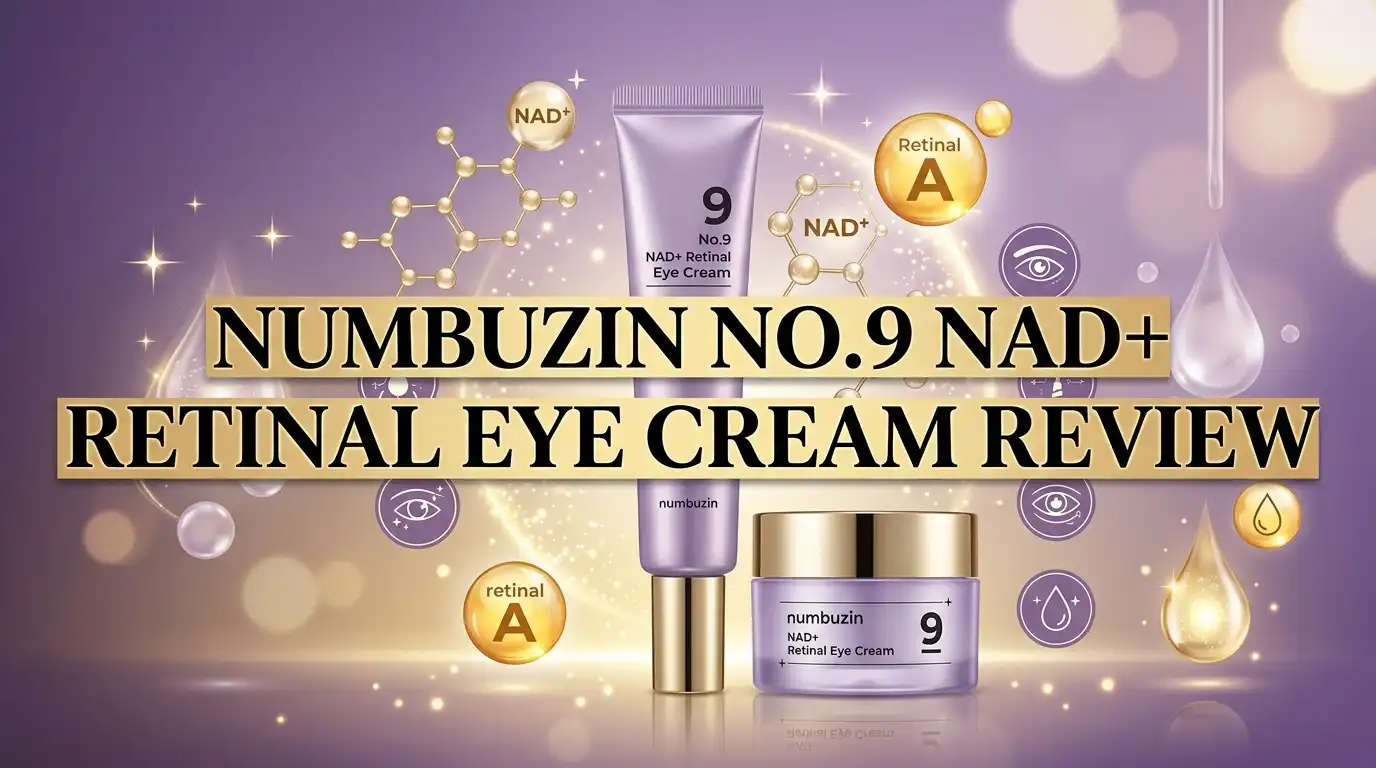
This specific product is the No.9 NAD+ Retinal Volumetox Eye Cream. It arrives in a 0.67 fl oz tube, roughly 20mL, in a soft cream format that leans rich without feeling heavy.
The brand calls it an all in one longevity formula. Translated plainly, it means one product handling firmness, lines, dark circles, and dullness at the same time.
There is a second version worth knowing about. numbuzin also sells a No.9 NAD+ Retinol Volumetox Eye Cream, which uses retinol instead of retinal and has a pearlescent finish.
Shoppers confuse the two constantly. The retinal version is the stronger, faster acting option, while the retinol version suits total beginners.
What sets this tube apart is the peptide count. The ingredient list carries more than fifty peptides, including copper tripeptide, palmitoyl pentapeptide, and acetyl hexapeptide variants.


Last update on 2026-04-11 / Affiliate links / Images from Amazon Product Advertising API
Most eye creams at this price include two or three peptides as a marketing flourish. numbuzin loaded this one instead, and that choice shows in the results.
Key Ingredients Inside the Formula
The ingredient list runs long, so here is what actually drives performance.
Retinal sits in the lower third of the list, which is normal for potent retinoids. It is encapsulated in liposomes, meaning the active is wrapped in a lipid shell that releases it slowly into skin.
That encapsulation matters more than people realize. It reduces the sting, flaking, and redness that scare beginners away from retinoids.
Nicotinamide adenine dinucleotide, or NAD+, appears in the middle of the list. NAD+ is a coenzyme your cells use for energy production, and levels naturally decline with age.
Topical NAD+ research is still young. The early data looks promising for tone and vitality, but treat it as a supporting player rather than the star.
Niacinamide ranks seventh, which is a meaningful position. This is the workhorse for dark circles, pigment, and barrier support, and it pairs well with retinoids by calming the irritation they cause.
Ceramide NP and cholesterol rebuild the lipid barrier. The skin under your eyes is thin and dries out fast, so these two keep the cream from feeling stripping.
Macadamia seed oil, olive fruit oil, and shea butter give the cream its cushion. They are the reason this feels comforting instead of tight.
Adenosine is a Korean regulatory approved wrinkle ingredient. Its inclusion means the wrinkle claims have actual backing under Korean cosmetic law.
The peptide stack closes things out. Copper tripeptide supports repair, palmitoyl tripeptide targets collagen signaling, and acetyl octapeptide softens expression lines.
Texture, Scent, and First Impressions
The cream squeezes out pale ivory and slightly thick. It is not a gel, not a balm, and not a serum, sitting somewhere comfortably in the middle.
One rice grain sized amount covers both eyes. Anything more leaves a film that sits under makeup badly.
Spreadability is good. The cream warms quickly between fingertips and taps in without dragging the delicate skin.
Absorption takes around sixty to ninety seconds. There is a brief tacky window, then the finish settles into something soft and slightly dewy.
It layers well under sunscreen. I tested it with three different Korean SPF products and got no pilling, which is rare for a cream this rich.
Scent is nearly neutral. There is a faint cosmetic base smell that fades within a minute, and no added fragrance appears in the ingredient list.
The tube packaging deserves praise. Retinal degrades in light and air, so an opaque tube protects the active far better than a jar.
First morning after use, my under eyes looked smoother and less crepey. That is hydration doing its job, not the retinal, but the visual payoff still feels good.
The real test starts at week three, when retinoids begin actual remodeling. First impressions only tell you about comfort and cosmetic finish.
On comfort, this passes easily. Zero stinging, zero watering eyes, and no next morning tightness across my testing period.
My 8 Week Test Results
Last update on 2026-09-21 / Affiliate links / Images from Amazon Product Advertising API
I used the cream every night for eight weeks. Mornings stayed simple with a hydrating serum and sunscreen only.
Week 1 and 2 brought hydration changes and nothing more. Fine dehydration lines under my eyes softened, and my concealer stopped creasing by midday.
No purging happened. No redness, no flaking, and no irritation on my eyelids, which usually react to anything retinoid based.
Week 3 and 4 showed the first real shift. The crepey texture below my lower lash line looked tighter, and my crow’s feet appeared softer when I smiled.
Dark circles improved slightly. My circles are partly pigment and partly shadow from hollowing, and the pigment portion lightened while the hollowing stayed the same.
That distinction matters. No cream fills volume loss, so manage expectations if your circles come from deep tear troughs.
Week 5 and 6 delivered the firmness change. My upper eyelids looked less droopy in morning photos, and the skin felt springier under pressure.
I also used the cream on my smile lines. Those softened noticeably, which confirms the brand’s claim about full face use.
Week 7 and 8 brought steady, quiet gains. Tone looked more even, texture looked refined, and a small dark spot near my temple faded.
The 20mL tube lasted just past week nine with nightly use on eyes and smile lines. Eye area only, it would stretch past three months.
Overall, this delivered roughly seventy percent of what a prescription strength retinoid gives, with almost none of the discomfort.
Top 3 Alternative for numbuzin No.9 NAD+ Retinal Eye Cream
Not every routine needs the same cream. Budget, skin sensitivity, and specific concerns all shift the right pick.
These three alternatives cover the most common reasons someone skips the numbuzin tube. Each one is a proven Korean formula with strong Amazon reviews in 2026.

Last update on 2026-06-07 / Affiliate links / Images from Amazon Product Advertising API
The Beauty of Joseon Revive Eye Serum suits anyone who wants a lighter feel. It uses retinal plus niacinamide in a serum texture that disappears into skin, and the 30mL bottle makes it one of the best value retinal products available.

Last update on 2026-09-21 / Affiliate links / Images from Amazon Product Advertising API
The Anua Retinol 0.1 Caffeine Revitalizing Eye Cream targets puffiness first. Caffeine constricts blood vessels for that morning depuffing effect, and the gentler retinol dose fits sensitive skin better than retinal does.

Last update on 2026-09-21 / Affiliate links / Images from Amazon Product Advertising API
The COSRX Retinol 0.1% Cream covers eyes and neck together. It is the pick for anyone treating sagging along the jaw and neck alongside eye concerns, and the squeeze tube keeps the retinol stable for months.
Pick by concern, not by hype. Puffiness points to caffeine, pigment points to niacinamide, and firmness points to retinal plus peptides.
How to Use It the Right Way
Application technique changes results more than most people expect. Rushing this step wastes the product and stretches your skin.
Start at night only. Retinal breaks down in sunlight, and evening use gives the active a full uninterrupted window to work.
Cleanse and tone first. Skin should be slightly damp, not soaking, because excess water dilutes the cream and pushes it around.
Use a rice grain amount per eye. Dot it on the orbital bone, which is the ridge you feel when you press gently around the socket.
Tap with your ring finger. That finger applies the least pressure, and pressure is what creates long term crepiness in thin skin.
Avoid the lash line itself. Product migrates upward through the night, so a gap of about one centimeter prevents watery eyes in the morning.
Follow with moisturizer if your skin runs dry. The cream is emollient enough alone for most people, but winter skin appreciates a seal on top.
Start slowly. Three nights the first week, five nights the second week, then nightly from week three onward.
Sunscreen is mandatory the next morning. Retinoids thin the stratum corneum temporarily and increase sun sensitivity, so skipping SPF undoes your progress.
Do not layer this with strong acids or high strength vitamin C on the same night. Alternate nights instead, and your barrier will thank you.
Extra cream goes on smile lines, forehead, or the backs of your hands. Nothing here restricts the formula to the eye area.
Who Should Buy It and Who Should Skip It
This cream fits a specific shopper well. It also fails a few people, and honesty helps more than blanket praise.
Buy it if you are in your late twenties through fifties and starting to notice firmness loss. That is the window where retinal and peptides show the clearest payoff.
Buy it if retinoids have irritated you before. The liposome encapsulation and the ceramide plus niacinamide base make this one of the gentler retinal products on the market.
Buy it if you want multitasking. One tube handling eyes, smile lines, forehead, and rough texture beats buying three separate products.
Buy it if your dark circles come from pigment. Niacinamide plus retinal genuinely fades brown toned circles over two to three months.
Skip it if you are pregnant or nursing. Retinoids are avoided during pregnancy, and no cosmetic result justifies that risk.
Skip it if your dark circles come from volume loss or visible blue veins. Those are structural, and only fillers or medical treatments address them.
Skip it if you have active eczema or rosacea around the eyes. Wait until your barrier calms, then introduce it slowly.
Skip it if you want overnight results. Retinal needs at least four weeks, and the real firmness gains land around week six.
Teens and early twenties skin rarely needs this. A hydrating eye cream and daily sunscreen serve that age group better.
Retinal vs Retinol: Why the Swap Matters
The two words look almost identical. The difference in your skin is real.
Your skin converts every retinoid into retinoic acid, the form that actually triggers cell turnover and collagen production. The number of conversion steps decides the speed.
Retinol needs two conversion steps. Retinal needs one, which makes it roughly ten times more efficient by weight in laboratory comparisons.
Faster conversion means visible results sooner. Users typically see change from retinal in four to six weeks versus eight to twelve weeks for retinol.
Irritation does not scale the same way. Studies on retinal show tolerability close to retinol, partly because it spends less time sitting in skin as an intermediate.
Retinal also carries a mild antibacterial effect. That helps people who get texture bumps or milia around the eyes.
The tradeoff is stability. Retinal degrades faster with light and air exposure, which is why the encapsulation and opaque tube in this product matter so much.
Prescription tretinoin remains stronger than both. It is retinoic acid directly, with zero conversion needed and correspondingly higher irritation.
For an eye area product, retinal hits the right balance. You get meaningful strength without the peeling that makes people quit after two weeks.
numbuzin selling both a retinol and a retinal version gives you a ladder. Start on the retinol tube if you have never used a retinoid, then move up.
Pros and Cons
Every product has tradeoffs. Here are the honest ones after eight weeks of daily use.
Pros
- Encapsulated retinal delivers real firmness and line softening without the stinging, peeling, or redness that most retinoid eye creams cause during the first month
- More than fifty peptides in one formula, including copper tripeptide and palmitoyl pentapeptide, which is far beyond what competitors offer at this price
- Niacinamide sits high in the ingredient list and visibly fades pigment based dark circles across six to eight weeks
- Ceramide, cholesterol, and shea butter keep the barrier comfortable, so dry skin types can use it nightly without tightness
- Safe for full face use on smile lines, forehead creases, and rough texture, which stretches the value of a small tube
- Opaque squeeze tube protects the retinal from light and air far better than jar packaging
- No added fragrance, no alcohol high in the list, and no pilling under sunscreen or makeup
- Price near $19.50 for 20mL, frequently discounted on Amazon, which undercuts most Western retinal eye creams by half
Cons
- The 20mL size runs out in roughly two to three months with nightly use, faster if you apply it to your full face
- Results need patience, with meaningful firmness changes arriving around week five or six rather than immediately
- Does nothing for dark circles caused by hollowing, thin skin showing veins, or genetic pigmentation depth
- Not suitable during pregnancy or breastfeeding due to the retinoid content
- The similar naming between the retinal and retinol versions confuses shoppers regularly
- Slightly rich for very oily skin types who dislike any cushion or dewy finish
- Requires daily sunscreen commitment, which adds a step for people who skip SPF
How It Compares to Other Korean Eye Creams
The Korean eye cream category is crowded in 2026. Comparison sorts the noise.
Against the Beauty of Joseon Revive Eye Serum, numbuzin wins on richness and peptide count. Beauty of Joseon wins on volume, offering 30mL for a similar price in a lighter serum texture.
Choose numbuzin if your skin runs dry. Choose Beauty of Joseon if you hate any weight around your eyes.
Against COSRX Retinol 0.1% Cream, numbuzin feels more sophisticated. COSRX delivers a straightforward retinol dose, while numbuzin layers retinal with NAD+, peptides, and ceramide.
COSRX still wins on one point. Its formula is explicitly positioned for neck use, and the texture suits that larger area well.
Against the Anua Retinol 0.1 Caffeine Eye Cream, the split is about morning puffiness. Anua depuffs, numbuzin firms, and neither fully replaces the other.
Against Western brands, the price gap is striking. Comparable retinal eye products from US and European labels run three to five times higher for similar active levels.
numbuzin’s advantage is ingredient density per dollar. You get a formula that would cost sixty dollars elsewhere for under twenty.
The weak spot is size. Korean eye creams often run small, and 20mL disappears faster than the 30mL bottles competitors offer.
If total value per milliliter drives your decision, Beauty of Joseon edges ahead. If formula complexity drives it, numbuzin wins clearly.
Final Verdict: Is It Worth Buying in 2026?
Yes, for most people this is an easy recommendation. The formula is smart, the price is fair, and the results showed up on schedule.
What earns the recommendation is balance. Strong retinal, high peptide content, and a supportive base that keeps irritation near zero rarely appear together at this price.
Firmness was the standout result. My eyelids and under eye texture changed in a way that hydration alone never achieves.
Pigment improvement came second. Brown toned circles lightened steadily, and my overall tone looked more even by week eight.
The honest limits are structural. Hollowing stayed, deep set shadows stayed, and no topical product changes those.
Value holds up well. Even at the regular $25 price, the ingredient list justifies the cost, and Amazon discounts often push it closer to fifteen dollars.
I would repurchase. The tube did what it promised, and it did so without the two week irritation phase that usually comes with retinoids.
Give it eight weeks before judging. Retinoids reward patience, and quitting at week three means missing the entire point.
Pair it with nightly consistency and daily sunscreen. Those two habits decide whether any retinoid works or sits uselessly in a drawer.
Rating: 4.5 out of 5. Points lost only for the small tube size and the confusing product naming.
Frequently Asked Questions
Does the numbuzin No.9 NAD+ Retinal Eye Cream cause purging?
Most users report no purging. The retinal is encapsulated, which slows release and reduces the sudden turnover that triggers breakouts. A few people notice small bumps in week two, and those clear within seven to ten days.
Can beginners use this retinal eye cream?
Yes, with a slow start. Use it three nights the first week, five nights the second week, then move to nightly. The ceramide and niacinamide base makes it noticeably gentler than most retinal products.
How long until I see results?
Hydration changes appear within days. Texture and fine line improvement land around week three or four. Firmness and pigment changes need five to eight weeks of consistent nightly use.
Can I use it in the morning?
Night use is better. Retinal degrades in sunlight and increases sun sensitivity, so evening application protects both the ingredient and your skin. If you use it in the morning, sunscreen becomes non negotiable.
Is it safe for sensitive eyes?
Generally yes. There is no added fragrance and no high alcohol content. Keep application on the orbital bone rather than the lash line to prevent product migrating into your eyes overnight.
What is the difference between the retinal and retinol versions?
The retinal version acts faster and targets firmness plus pigment more aggressively. The retinol version is milder with a pearlescent finish, making it the better entry point for total beginners.
Can I use it on my whole face?
Yes. numbuzin formulated it for full face use, including smile lines, forehead creases, and rough texture. Just expect the tube to empty faster.
Is it safe during pregnancy?
No. Retinoids of all types are avoided during pregnancy and breastfeeding. Switch to a peptide and niacinamide eye cream without retinoids for that period.

Hi, I’m Rachel Powell, the founder and creative mind behind FashionBeautyLooks.com. With a passion for all things fashion and beauty, I’ve dedicated my career to helping others discover their unique style and enhance their natural beauty.